#reinforcement-learning
Every summary, chronological. Filter by category, tag, or source from the rail.
Improving LLM Agent Training with Subtask Decomposition
RLDS improves agent training by replacing scalar trajectory rewards with subtask-specific advantage estimation, allowing models to learn more effectively from complex, multi-step tasks.
Optimizing AI Search with Reinforcement Learning
By replacing rigid, human-designed search pipelines with specialized RL-trained agents, developers can achieve 20x faster search speeds and 100x lower costs while significantly improving retrieval accuracy.
 AI Engineer
Closing the Reinforcement Gap for Enterprise AI Agents
Arga Labs is building digital twins of enterprise software like Salesforce and Outlook to provide repeatable, sandbox environments for training AI agents, overcoming the lack of testable infrastructure in business applications.
Micro1 Hits $500M Run Rate Amidst AI Data Training Boom
AI data-labeling startup Micro1 has scaled to a $500M gross annual run rate by pivoting from AI recruiting to high-demand human-in-the-loop and synthetic data generation.
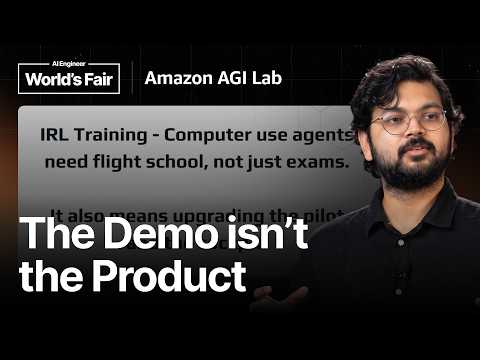
Moving AI Agents from Game-Based RL to Real-World Reliability
Training AI agents for computer use requires moving beyond simple outcome-based reinforcement learning toward 'flight school' simulations that account for real-world messiness, partial observability, and adversarial UI.
 AI Engineer
Mitigating Bus Bunching via Reinforcement Learning and Semantic Embeddings
This research introduces a reinforcement learning framework that uses semantic stop embeddings to predict and prevent bus bunching, significantly improving transit reliability compared to traditional control methods.
River AI Raises $1.1B to Build Personally Trainable AI Agents
River AI, founded by Igor Babuschkin, secured $1.1 billion to move beyond prompt engineering by enabling users to train their own open-source models for personal agent use.
Decoupling RL Rollout Fleets from Training Clusters via Stitch
By exploiting the fact that Adam-optimized model updates are sparse in low-precision serving views, you can sync rollout weights via 500MB patches instead of 500GB checkpoints, enabling global, elastic RL training.
 AI Engineer
Teaching AI to Hack: Moving Beyond Benchmaxxing
To build effective AI security agents, developers must move from simple crash-based benchmarks to deterministic, multi-vulnerability 'audit tasks' that measure real exploitation capabilities like arbitrary code execution.
 AI Engineer
Scaling Agentic Post-Training via Real-World Interaction
To move beyond synthetic benchmarks, AI agents must learn directly from production environments. This requires shifting from controlled, replayable training loops to systems that ingest real-world interaction data and qualitative feedback to enable continuous, self-improving models.
 AI Engineer
Scaling AI to Long-Horizon Reasoning
Scaling AI to long-horizon tasks requires moving beyond context windows to a mindset of patience, utilizing value models for credit assignment, and building better, open-ended simulation environments.
Engineering Agentic Models: Insights from MiniMax
Building production-ready AI agents requires co-designing the model architecture, training data, and inference stack—specifically optimizing for long-horizon tasks, multimodal inputs, and efficient KV cache management.
Stabilizing Critic-Free RL with BV-Blend
BV-Blend improves reinforcement learning stability by blending prompt-local statistics with historical cluster-based moments, preventing training stalls when reward variance is zero.
ATOD: Hybrid Distillation for Autonomous Agent Training
ATOD combines on-policy distillation with reinforcement learning using an annealed schedule and turn-level reweighting to train small agent models that outperform their larger teacher models.
Tandem Reinforcement Learning: Aligning AI Reasoning with Humans
Tandem Reinforcement Learning (TRL) forces stronger models to co-generate reasoning with weaker models, resulting in more legible, robust, and human-compatible chains of thought without sacrificing performance.
ATOD: Hybrid Training for High-Performance AI Agents
ATOD combines on-policy distillation with reinforcement learning to overcome the performance ceiling of imitation learning, using an annealed schedule and turn-level reweighting to improve long-horizon agent training.
Automating ETL Pipeline Recovery with RL Agents
A reliable, safety-first architecture for ETL pipeline remediation that uses deterministic anomaly detection, Q-learning for action selection, and an external safety layer to reduce MTTR by 99.85%.
Stress-Testing AI Agents with Simulated Digital Environments
Patronus AI is using 'digital world models' to simulate complex environments, allowing developers to stress-test autonomous agents through reinforcement learning and automated verification.
Breaking Filter Bubbles with Semantic Pareto-DQN
A new reinforcement learning framework for recommender systems that treats engagement, diversity, and fairness as distinct, non-aggregable rewards to prevent semantic homogenization.
Fixing GRPO Failure Modes in Production
GRPO is more efficient than PPO but prone to silent failures like advantage collapse and entropy loss. Using Dynamic Sampling Policy Optimization (DAPO) techniques—specifically dynamic sampling, token-level normalization, and decoupled KL—is essential for stable production training.
Verbal Reinforcement Learning: Closing the Feedback Loop
The paper introduces a framework for 'Verbal Reinforcement Learning' (VRL), shifting from raw reward signals to structured insight governance by extracting and managing verbal feedback from world interactions.
SVoT: Enhancing Spatial Reasoning via State-Aware Visualization
SVoT improves spatial reasoning in LLMs by using reinforcement learning to generate state-aware visual representations of thought, allowing models to track complex spatial relationships more accurately than text-only chain-of-thought.
Optimizing AI for Tool Use via RL and Data Quality
Improving model performance for complex tasks often requires teaching tool discipline through RL and high-quality data rather than scaling model size. A 4B parameter model outperformed a 235B model by learning to inspect schemas and self-correct errors.
 AI Engineer
Harness-1: Offloading Bookkeeping to Improve Search Agent Performance
Harness-1 improves retrieval performance by separating search policy from state management, using a stateful harness to handle bookkeeping and memory, allowing the 20B model to focus on semantic decisions.
SIA: Self-Improving Agents That Evolve Scaffold and Weights
Hexo Labs' open-source SIA framework enables AI agents to autonomously improve by iteratively updating both their operational harness (prompts/tools) and internal model weights (via LoRA) within a single feedback loop.
Practical Lessons in Building Adaptive Routing Agents with RL
Building a DQN-based routing agent reveals that reinforcement learning is often fragile; success depends less on the algorithm and more on rigorous reward shaping, stability tracking, and evaluation beyond simple success rates.
COSMO-Agent: Automating CAD-CAE Design Loops with LLMs
COSMO-Agent is a reinforcement learning framework that enables LLMs to bridge the CAD-CAE semantic gap by orchestrating external tools to perform iterative, constraint-driven geometric design.
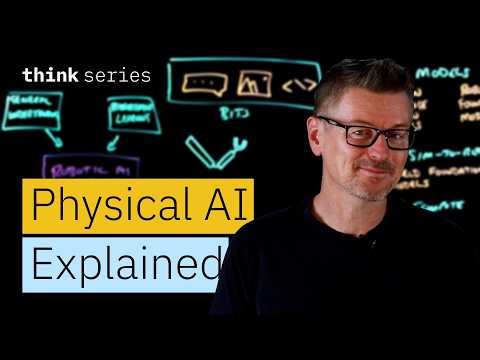
Physical AI Trains Robots via Sim + RL Feedback Loops
Physical AI equips robots with VLAs for perception-reasoning-action, uses reinforcement learning in randomized simulations, and iterates with real-world data to close the sim-to-real gap for messy environments.
 IBM Technology
Relative Slate Bandits for E-com Homepage Picks
Use group-relative contextual bandits to select optimal product slates for e-commerce homepages, leveraging relative quality signals for efficient RL over full prediction models.
RL Solves Sequential Coupon Optimization
Treat coupon decisions (when, to whom, strength) as sequential problems with reinforcement learning to balance conversion, margins, budgets, and customer fatigue—backed by field experiments.
Showing 30 of 30