#governance
Every summary, chronological. Filter by category, tag, or source from the rail.
Digital Sovereignty: Maintaining Control in AI Systems
Digital sovereignty is the ability to maintain control over data, operations, technology, and AI models. Rather than a barrier to innovation, it is an architectural priority that ensures security, trust, and long-term flexibility.
 IBM Technology
AIREP: A Protocol for Verifiable AI Runtime Governance
AIREP (AI Runtime Evidence Protocol) provides a standardized framework for generating and verifying cryptographic evidence for individual AI decisions, enabling transparent and auditable runtime governance.
Runtime Governance for Agentic AI: Action-Boundary Control
The article proposes a framework for securing autonomous agents by enforcing strict action boundaries, cryptographic provenance, and a fail-closed execution model to prevent unauthorized or dangerous operations.
The CASE Framework for Enterprise Agentic AI Governance
The CASE Framework provides a multi-disciplinary architecture to govern enterprise AI agents by integrating technical, legal, and operational controls into a unified oversight structure.
The Emergence of a De Facto AI Licensing Regime in the US
The US government has established an ad hoc, de facto licensing regime for frontier AI models, requiring companies like OpenAI to stagger releases pending security reviews and government approval.
Human Rights Experts Must Influence Age Assurance Standards
Mandatory age assurance for social media risks widespread surveillance and rights violations. Human rights experts must engage in technical standards-setting to prevent 'rights-washing' and ensure privacy-preserving design.
Moving Beyond Declarations: Building Global AI Governance Architecture
The UN's Global Dialogue on AI must shift from symbolic consensus-building to creating concrete, inclusive institutional architecture that empowers the Global Majority to govern AI.
The EU's Tech Sovereignty Package: Sovereignty or Subservience?
The EU's 'Tech Sovereignty Package' fails to reduce reliance on US Big Tech, instead codifying a definition of sovereignty based on geography rather than ownership, effectively entrenching foreign control over European public infrastructure.
Building Interoperable Standards for Advanced AI Systems
OpenAI is co-founding the Appia Foundation to translate high-level AI safety frameworks into modular, open technical specifications that enable consistent, third-party evaluation across the global AI supply chain.
The Limits of Export Controls in the Age of AI Capabilities
The US government's recent restriction and subsequent easing of access to Anthropic's Mythos 5 model highlights a fundamental regulatory crisis: traditional export controls designed for physical goods are ill-suited for cloud-hosted AI capabilities.
Safeguarding LGBTQ+ Data in State and Local Government
As federal data collection on LGBTQ+ populations shrinks, state and local governments must balance the need for inclusive data to drive equitable policy with robust governance frameworks to prevent the weaponization of sensitive information.
Analyzing AI Governance: A Pipeline for Comparing DAO and Corporate Models
A new LLM-powered pipeline reveals that while governance structures (DAO vs. Corporate) influence thematic focus, both models suffer from similar levels of participation inequality and community fragmentation.
Moving Beyond Operation-Level Oversight for AI Agents
Current AI governance fails because it focuses on individual operation approvals rather than the cumulative outcomes of agentic sequences, creating a dangerous gap between human intent and machine execution.
Federal Agencies Mandated to Finalize Quantum-Ready Migration Plans
The OMB has directed federal agencies to finalize post-quantum cryptography (PQC) migration plans within 120 days, setting a phased timeline to secure high-impact systems against future quantum decryption threats by 2035.
Big Tech's Privacy Shield Against DMA Interoperability
Google and Apple are leveraging privacy and security concerns to lobby against EU Digital Markets Act (DMA) requirements that would force them to open their closed ecosystems to third-party AI and search competitors.
Beyond the Human-in-the-Loop: Defining Meaningful AI Governance
The presence of a human reviewer is a procedural step, not a governance framework. Meaningful oversight requires institutional authority, clear escalation paths, and the power to override automated systems.
Education Department CIO Office Gutted by 2025 Reduction-in-Force
A Department of Education OIG report reveals that a 2025 reduction-in-force campaign cut the Office of the Chief Information Officer's staff by 52%, leaving critical cybersecurity and IT oversight suboffices entirely vacant.
Private AI Governance is No Substitute for Public Law
Private companies using contractual 'red lines' to govern government AI use are undemocratic, brittle, and ultimately displace the political urgency required for durable, legislated civil liberties protections.
Prioritizing Textual Misinformation in AI Policy
While visual deepfakes capture public attention, research shows AI-generated text is more persuasive and pervasive. Policy must shift toward 'preventive corrective information' to build user resilience.
Estonia's Proposed Digital ID Framework for AI Agents
Estonia is developing a national 'AI ID' system to replace blanket credential sharing with scoped, auditable, and verifiable digital identities for AI agents.
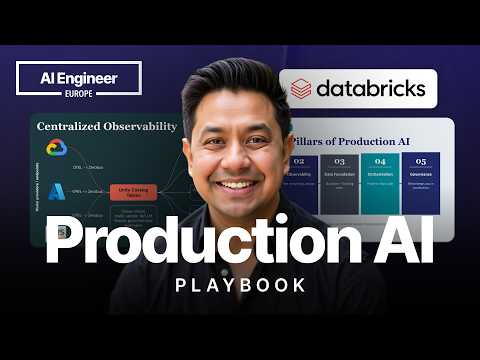
The Production AI Playbook: Deploying Agents at Enterprise Scale
Moving AI from demo to production requires shifting focus from model selection to five pillars: evaluation, observability, data foundation, orchestration, and governance.
 AI Engineer
Agent Control Planes and AI-Driven Mathematical Discovery
As AI agents move from POC to production, enterprises require a 'control plane' for governance, observability, and safety. Simultaneously, AI models are demonstrating advanced reasoning by solving long-standing mathematical problems like the Erdős planar unit distance puzzle.
 IBM Technology
5 AI Risks That Can End Your Career
Using AI at work without governance, verification, or oversight leads to data breaches, security vulnerabilities, and professional liability. Success requires balancing AI adoption with strict adherence to security frameworks.
 IBM Technology
Governance by Construction for Generalist Agents
The paper proposes 'Governance by Construction' as a paradigm for AI safety, shifting from post-hoc monitoring to embedding constraints directly into the agent's architecture and execution environment.
Showing 24 of 24