#design-systems
Every summary, chronological. Filter by category, tag, or source from the rail.
Design Engineering in the Age of Just-in-Time Interfaces
The hosts of Dive Radio discuss how AI is shifting design from static artifacts to dynamic, generative workflows, emphasizing that the most effective AI-powered tools are those that augment human decision-making rather than fully automating it.
 Dive Club
Geoff Teehan on Navigating Design Cycles and Software Utility
Geoff Teehan discusses his career evolution from agency founder to enterprise design leader, emphasizing that software is still in its 'parking spot' phase—a period of early, unrefined adoption before true maturity.
 Dive Club
Building Products in the Age of AI: Insights from Dive Radio
The hosts of Dive Radio discuss the evolving role of the 'founding designer,' the shift from frontier model intelligence to specialized, high-speed AI routing, and the importance of building in public while navigating the rapid pace of modern design tooling.
 Dive Club
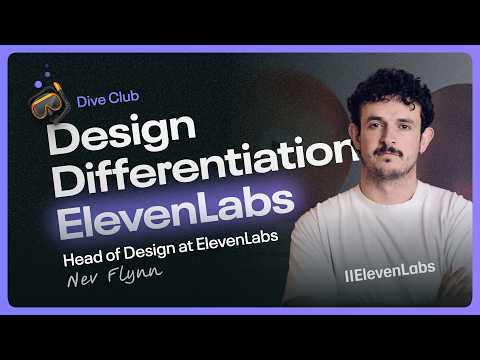
Artful Expression in Enterprise Design at ElevenLabs
Nev Flynn, Head of Design at ElevenLabs, explains how integrating specialist roles like WebGL experts and sound designers allows the company to maintain a creative, artful edge even as they scale into enterprise markets.
 Dive Club
Designing in the Age of AI and Agents
Product design is shifting from static mockups to dynamic, agent-driven prototypes. Success in 2026 requires embracing AI-assisted workflows, multi-tasking, and a 'publicly curious' mindset to navigate rapid industry changes.
 Dive Club
Scaling Design Operations with AI Agents
By treating design systems as strict foundations and using AI agents to automate repetitive tasks like data-driven asset generation and visual QA, a single designer can manage thousands of deliverables for large-scale events.
 AI Engineer
Decoding Design: Measuring and Eliminating AI Slop
AI slop is defined by repetition, lack of fit, and low intent. By decomposing design into measurable probes and structured brand components, we can move beyond generic model outputs to create high-fidelity, context-aware content.
Steering AI Design with Adjectives and Verbs
Design cannot be 'oneshotted' by AI because it requires context and taste. Instead of full automation, use a vocabulary of design-specific adjectives and verbs to steer AI agents toward intentional, high-quality outcomes.
Closing the Design-Code Roundtrip with Deterministic Guardrails
True bidirectional design-code synchronization remains elusive due to model non-determinism. ReWeaver AI addresses this by using deterministic guardrails to detect and reconcile 'drift'—the new form of technical debt—ensuring human control over AI-generated code.
Engineering Brand Universes in the Age of AI
Building a brand today requires moving beyond static assets to creating dynamic, interactive 'universes' where AI-driven workflows and real-time interface generation redefine how we build and ship products.
 Dive Club
Building Iconic Brands and Tools: A Conversation with Evil Rabbit
Evil Rabbit, founding designer at Vercel, shares his journey from a 12-year-old web designer in Argentina to shaping Vercel’s brand identity, emphasizing the power of minimalism, consistency, and building tools that empower developers.
 Dive Club
Architecting Intent-Driven UX: Moving Beyond Static Interfaces
To build reliable generative UI, move away from letting LLMs generate raw markup. Instead, use an orchestrator that maps user intent to a predefined, schema-compliant component catalog, ensuring the output remains consistent with your design system.
 AI Engineer
Building Figma's MCP Server: Lessons in AI Integration
Figma built its first MCP server by prioritizing local-first architecture, iterative evaluation with LLM judges, and mapping design components to production code via Code Connect to ensure high-fidelity, maintainable output.
 AI Engineer
AI Design Patterns and the Rise of the Creative Technologist
The hosts explore how AI is shifting design workflows, emphasizing that the most effective AI tools are not fully automated but rather augment human decision-making and creative craft.
Designing Grok Bot: A Journey of Iteration and Agent UX
John Bai, an early designer at Cursor, shares the iterative process behind Grok Bot, explaining why the team ultimately settled on a chat-based interface despite initial explorations into ambient, OS-native UI patterns.
 Dive Club
Design Taste for AI Agents: Avoiding 'Vibe-Coded' Slop
To build high-quality AI apps, treat AI output as a base rather than a final product. Use specific 'slop gates' to block common AI design patterns, provide visual references, and iterate using smaller, faster models.
 AI Engineer
Building a Custom AI-Powered Prototyping Playground
Patrick Morgan built a custom, agent-native prototyping environment for Sublime Security that bridges the gap between static design tools and production code, enabling rapid, interactive iteration without the overhead of traditional design handoff.
 Dive Club
The Rise of the Designer-Founder in the AI Era
AI tools have removed the technical barriers to building, yet designers remain underrepresented as founders. The hosts argue that designers must move past the pursuit of 'ideal' outcomes and embrace the messy, iterative reality of shipping products.
 Dive Club
Nate Parrott on Building Claude Design
Nate Parrott explains how Claude Design evolved from a personal side project into a powerful tool for rapid prototyping, enabling designers to build custom, interactive interfaces at the speed of thought.
 Dive Club
Building AI-Powered Products: Workflows, Agents, and Community
A deep dive into modern design engineering, exploring how AI agents and mixed-media workflows are enabling builders to experiment faster, ship code directly, and foster community through interactive, live-demo projects.
 Dive Club
Charlie Deets on Designing for Utility and Experience
Charlie Deets, designer of Safari and Dia, argues that in an era where execution is commoditized, a designer's true value lies in simplifying complex systems, maintaining clear personal design principles, and focusing on high-level decision-making over getting lost in implementation details.
 Dive Club
The Rise of the AI-Powered Designer and the End of the 'Dumb Device' Era
The hosts explore how AI is redefining the 'web designer' role, the shift from data-driven to intuition-led product building, and the rapid evolution of AI-integrated hardware and software.
 Dive Club
Moving Beyond Folder-Based Documentation Architectures
Traditional folder-based hierarchies fail to reflect how knowledge is actually used. To support both humans and AI, documentation must shift from rigid storage structures to interconnected knowledge graphs.
Moving Beyond the Atomic Design Metaphor
Atomic design successfully taught the industry to think in terms of component composition, but its rigid taxonomy has become a source of unnecessary friction. Teams should prioritize composability over maintaining strict hierarchical labels.
The Steering Layer: Enforcing Brand and Code Cohesion in AI
A 'steering layer' is an intentional architectural component that sits between AI tools and a codebase, using context, guidelines, and retrieval systems to ensure AI output remains consistent with brand and development standards.
Hypertokens: Bridging the Gap Between Tokens and Components for AI
Hypertokens are a proposed design-system concept that bundles multiple style properties into a single, machine-readable unit. By providing AI agents with explicit intent rather than raw values, they reduce guesswork, prevent design drift, and enable automated, multi-format compilation.
Building a Design Stack for Claude Code
To get high-quality UI output from Claude Code, you must move beyond default engineering prompts by providing a structured 'design stack'—a combination of project briefs, design system tokens, and specialized MCP tools.
COrigami: AI-Driven Design for Flat-Foldable Origami
COrigami is an end-to-end AI pipeline that translates natural language into mathematically valid, flat-foldable origami crease patterns by combining geometric optimization with reinforcement learning-based aesthetic refinement.
Building Practical Figma Plugins with AI Agents
Avoid cluttering your workspace with redundant plugins. Instead, use AI agents to build custom tools that solve specific, repetitive manual tasks, following a structured prompt formula to ensure utility and maintainability.
 UI Collective
Teaching AI Agents Product Design Standards
Vercel treats product design decisions as code by embedding a 'product-design' skill in the repository, using linters for deterministic rules, and maintaining a human-in-the-loop evidence workflow to ensure agents understand the 'why' behind UI patterns.
Showing 30 of 89