#architecture
Every summary, chronological. Filter by category, tag, or source from the rail.
Building Defensible AI: An Air-Gapped Fortress for Financial Data
To build AI systems that hold up in court, treat them as data pipelines rather than magic boxes, prioritize physical security over software configuration, and use semantic routing to optimize compute.
 AI Engineer
Architecting Production-Grade LLM Gateways
LLM gateways require a shift from standard API engineering: prioritize per-request fallbacks over circuit breakers, track latency per-route rather than globally, and treat guardrails as unreliable services that require explicit fail-open/closed policies.
 AI Engineer
The AI Harness: Why Scaffolding Outperforms Model Intelligence
Nvidia research demonstrates that the 'harness'—the system of memory, tools, and supervisory logic surrounding an LLM—is more critical for long-horizon agent performance than the underlying model itself.
Architecting Enterprise AI Agents for Regulated Environments
Enterprise AI agents fail in production because compliance requirements are bolted on as an afterthought. Instead, build systems using immutable event logs, segregated object storage, and human-agent parity to make auditability and evaluation inherent to the architecture.
 AI Engineer
Guardrails First: Engineering Member-Facing Health AI
Healthcare AI safety is an architectural challenge, not a prompt engineering one. By moving deterministic rules into code, enforcing strict data boundaries, and treating monitoring as a continuous loop, you can build systems that are safe enough for clinical use.
Navigating the AI Security Trilemma: Smart, Fast, or Secure
Enterprises face a 'trilemma' where AI systems can only optimize for two of three pillars: intelligence, speed, or security. Achieving all three requires architectural interventions like security proxies to offload guardrails from the model.
 IBM Technology
Integrating AI Agents into Event-Sourced Systems
Improve fraud detection by layering agentic AI onto existing event-sourced architectures, using a semantic layer to provide agents with the necessary context to resolve ambiguous transactions.
 AI Engineer
AI-ModelNet: A Networked Paradigm for Collaborative AI
AI-ModelNet proposes a hierarchical, internet-inspired architecture to enable interconnection, capability sharing, and collaborative reasoning among heterogeneous, domain-specific models.
RL-Guided ETL Pipeline Remediation: Architecture and Evals
Automate ETL failure recovery using a deterministic anomaly detection layer, a Q-learning policy for action selection, and a hard-coded safety guardrail to ensure operational reliability.
What Outlives the Plan: Decoupling Rules from Code
Project plans fail when they conflate high-level decisions with current implementation state. To survive, rules must live in 'shelves' the code cannot touch: build graphs, persistent AI memory, and external calendars.
5 Essential Concepts for Modern AI Agent Architecture
Modern AI agents rely on five key standards and patterns—agents.md, agent skills, MCP, A2A, and sub-agents—to manage context, interact with external tools, and coordinate complex workflows.
 IBM Technology
Architecting On-Demand Module Injection in Node.js
Decouple application code from specific npm packages by using a capability-based registry. This pattern prevents dependency bloat, improves cold starts, and enforces strict governance over optional features.
Defining the Coordination Boundary in Distributed Systems
Coordination libraries should strictly manage lease state and fencing, leaving external side effects, idempotency, and recovery logic to the application layer to avoid coupling and bloat.
Why We Abandoned Microservices for a Modular Monolith
After three years of debugging distributed system failures, moving back to a single Rails application significantly improved developer productivity and system observability.
Building Multi-Agent Systems: When to Skip the LLM
A deep dive into building scalable, cost-effective multi-agent systems by using deterministic code for heavy lifting and LLMs only for high-level judgment, demonstrated through a 1,000-agent marathon simulation.
 Google Cloud Tech
The Headless Mobile Architecture: Using Rust for Shared Logic
Avoid the friction of Kotlin Multiplatform (KMP) on iOS by using a neutral Rust core. By leveraging UniFFI, you can generate idiomatic, native-feeling bindings for Android, iOS, and Web from a single source of truth.
Scaling Event Collection via Sidecar Agents and Schema Separation
Avoid the pitfalls of decentralized chaos or centralized bottlenecks by using sidecar agents to decouple domain-specific event definitions from infrastructure-level transport.
Building Resilient Systems with Smart Retry Mechanisms
Retries are essential for handling transient failures in distributed systems, but naive implementations cause 'retry storms.' Use exponential backoff with jitter, ensure idempotency, and monitor retry metrics to maintain system stability.
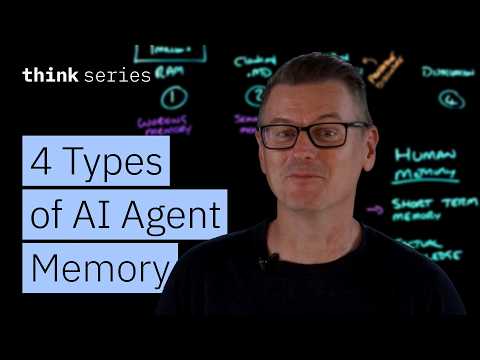
The Four Types of Memory for AI Agents
AI agents move beyond simple chatbots by utilizing four distinct memory architectures—working, semantic, procedural, and episodic—to manage context, knowledge, skills, and past experience.
 IBM Technology
Architecting Codebases for AI Agent Readiness
To make existing codebases agent-ready, implement directory-level 'context.md' files, adopt flatter architectural patterns, and prioritize a rigorous design phase over raw coding speed.
 Google Cloud Tech
Tool Calling Is Not Architecture
Tool calling is a demo-level feature; production systems require explicit boundaries, contracts, and failure policies to move beyond 'agent doing something weird' to reliable, debuggable software.
Showing 21 of 21